Arcade reviews

How the classics actually feel to play now.

These are independent editorial reviews, not historical summaries. We judge each game by responsiveness, readability, depth and replay value.

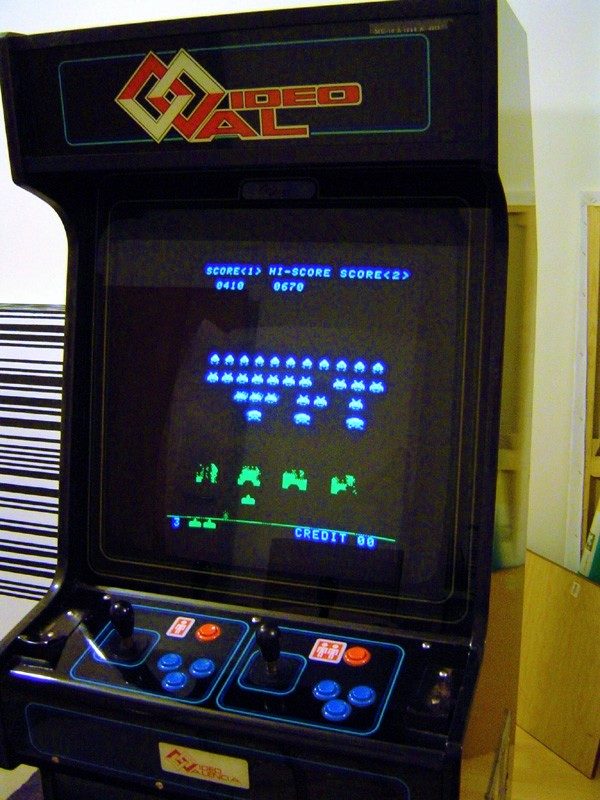
Space Invaders arcade cabinet
Scalleja / Wikimedia Commons
Arcade cabinet photograph

Pac-Man

1980 · Namco
9.6/10

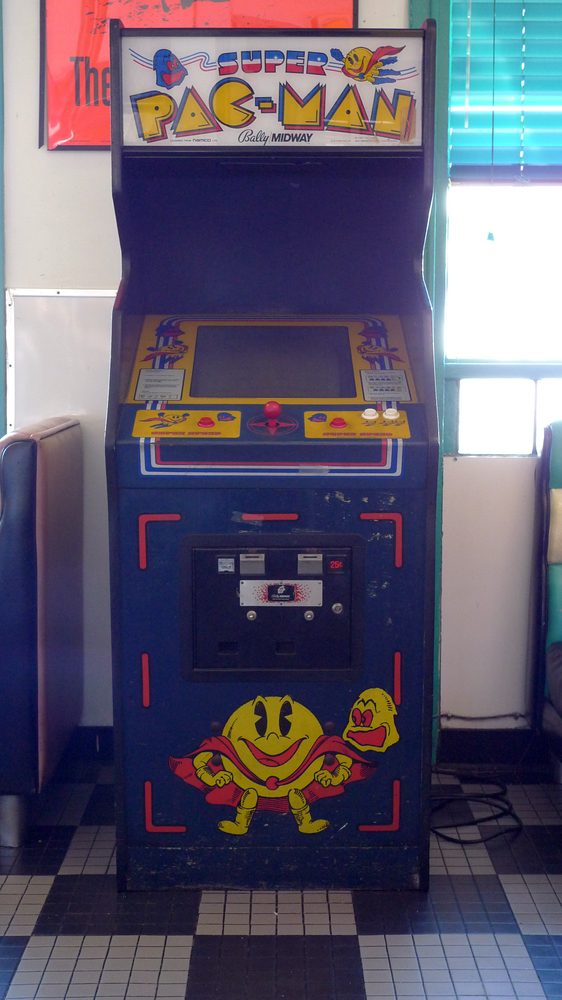
Pac-Man

Pac-Man survives because its rules are instantly legible while the actual play is full of small decisions. Every intersection asks whether you are collecting efficiently, creating space or committing to a dangerous route. The power pellet is still a brilliant reversal: prey becomes hunter for just long enough to tempt greed.

Who it is for: Best for players who enjoy route optimization, fast pattern recognition and score chasing.

9.8Control
10Clarity
9.7Replay
9.3Challenge
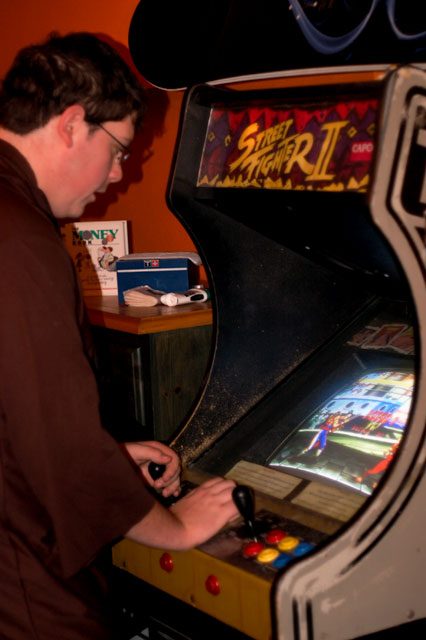
Arcade cabinet photograph

Street Fighter II

1991 · Capcom
9.5/10

Street Fighter II

Street Fighter II turned one-on-one fighting into a language of spacing, reads, timing and matchup knowledge. Its importance is historical, but the appeal is not merely nostalgic: the core duel remains understandable to spectators and endlessly technical for dedicated players.

Who it is for: Best for competitive players who enjoy learning matchups and improving through direct opposition.

9.4Control
10Depth
9.8Replay
8.8Access
Arcade cabinet photograph

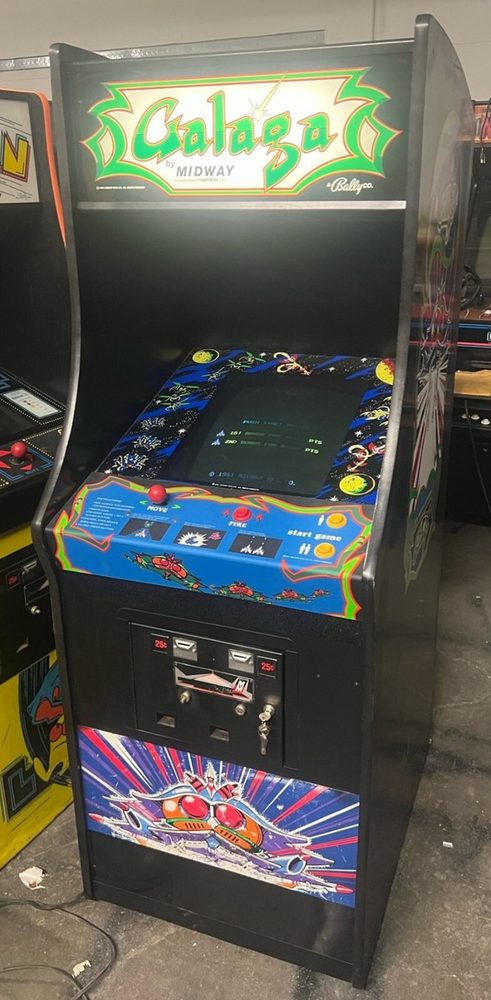
Galaga

1981 · Namco
9.3/10

Galaga

Galaga adds personality to the fixed-shooter formula through swooping formations, challenge stages and the famous captured-fighter risk. Doubling your firepower is powerful, but the attempt can cost a life; that single choice gives high-score runs memorable drama.

Who it is for: Best for short, focused sessions and players who like memorizing patterns without losing the need to react.

9.4Control
9.6Clarity
9.4Replay
9.0Challenge

Donkey Kong

1981 · Nintendo
9.2/10

Donkey Kong

Donkey Kong feels like a compact obstacle course. Barrels, ladders and moving hazards create an unusually physical sense of timing for such an early game. The challenge can feel severe, but each stage is readable enough that improvement is visible.

Who it is for: Best for precision-minded players who enjoy repeating a small set of stages until movement becomes deliberate.

8.9Control
9.3Clarity
9.1Replay
9.5Challenge
Arcade cabinet photograph

Space Invaders

1978 · Taito
9.0/10

Space Invaders

Space Invaders is foundational because the pressure is built into the enemy formation itself. As the screen empties, the remaining invaders accelerate, creating a natural difficulty curve inside each wave. That rhythm still produces tension with almost no mechanical clutter.

Who it is for: Best for players interested in pure arcade fundamentals and the history of score-driven shooters.

9.0Control
9.8Clarity
8.8Replay
9.1Challenge

Ms. Pac-Man

1982 · Midway
9.1/10

Ms. Pac-Man

Ms. Pac-Man takes the clean Pac-Man structure and adds variety through multiple mazes and less predictable enemy behavior. The result is a game that asks for more adaptation and slightly less rote routing.

Who it is for: Best for Pac-style maze fans who want a more variable and improvisational chase.

9.6Control
9.4Variety
9.5Replay
9.0Challenge
Arcade cabinet photograph

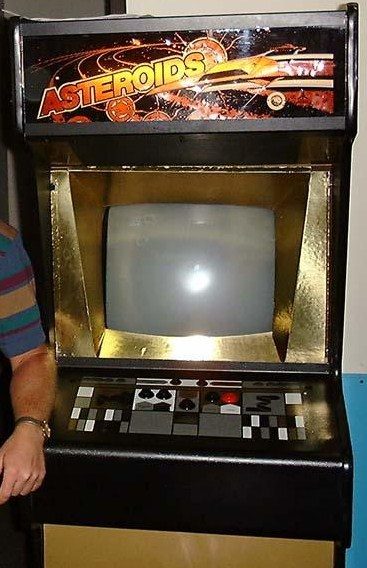
Asteroids

1979 · Atari
8.9/10

Asteroids

Asteroids is all momentum and restraint. Rotation, thrust and screen wrap create a movement model that initially feels slippery, then becomes expressive once you learn to manage drift.

Who it is for: Best for players who enjoy physics-like movement and mastering a control scheme that rewards finesse.

8.7Control
9.5Feel
9.0Replay
9.2Challenge

Frogger

1981 · Konami
8.8/10

Frogger

Frogger turns timing into a visual puzzle. Every lane has its own rhythm, so progress depends on reading multiple moving systems rather than simply reacting to one obstacle at a time.

Who it is for: Best for players who like timing puzzles, short attempts and instantly readable goals.

9.0Control
9.5Clarity
8.7Replay
9.0Challenge